SSTEWART ST. JAMES

TECHNOLOGY EXECUTIVE · CYBERSECURITY · AI

Stronger security.
Smarter spend.
Better systems.

I’m Stewart St. James. I build technology teams, take ownership of enterprise transformation, and engineer the systems that make it work. My experience connects software and infrastructure engineering leadership, cybersecurity, cost discipline, and practical AI delivery.

CHIEF AI OFFICER · CTO · VP OF IT · IT DIRECTOR

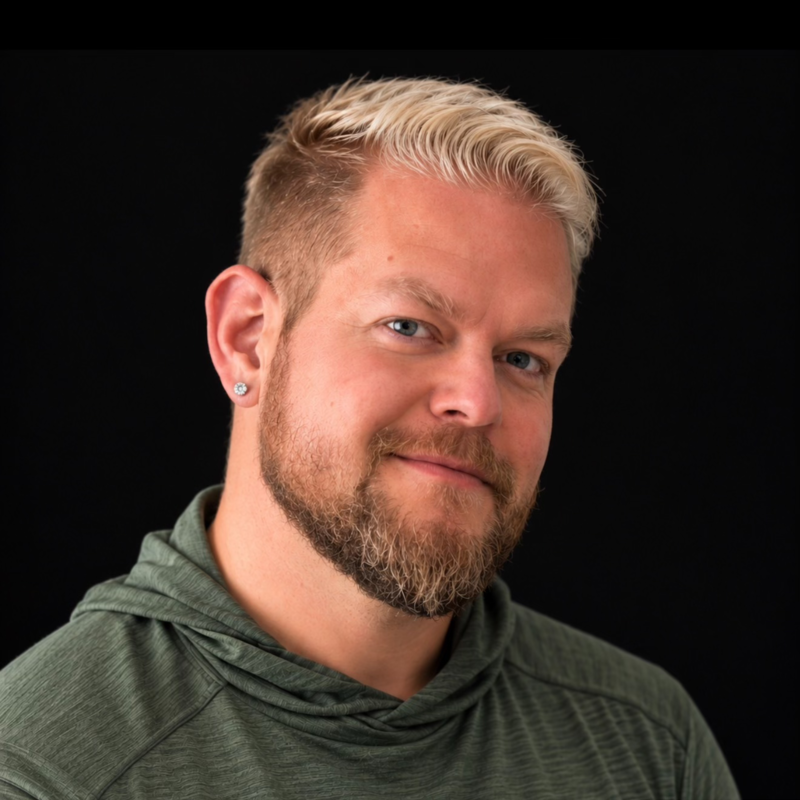
Portrait of Stewart St. James
STEWART ST. JAMESAlways learning. Always evolving. People first.
SECURITY WITH BUSINESS CONTEXT.STRATEGY WITH TECHNICAL DEPTH.↓
FINANCE-CONFIRMED IMPACT

$4M

Savings & avoided future spend

Combined result from vendor negotiations, consolidation, and spending controls.

TECHNOLOGY LEADERSHIP

92 people

A technology organization at scale

15 direct reports, including five managers, across engineering and IT operations.

GLOBAL ONBOARDING

3h → 20 min

Employee setup from first power-on

Across 100 hires, supporting a workforce in 39 countries.

01 / THE DECISIONS THAT MATTER

Risk. Cost. Execution.

Technology decisions
are business decisions.

My experience spans enterprise controls, multi-business-unit IT, vendor economics, and operational automation. Explore the work behind the decisions—and how I evaluate the next one.

CYBERSECURITY

Close the gaps between systems.

Security gets stronger when identity, access, and operations share the same picture. My approach starts with the paths people and services actually use—not a tool inventory alone.

THE APPROACH

01

Map the exposure

Trace privileged accounts, service identities, application access, and unmanaged exceptions. Prioritize the paths with the greatest business impact.

02

Engineer the control

Connect joiner, mover, and leaver workflows to least-privilege access. Combine SSO and MFA policy with downstream provisioning and explicit ownership.

03

Prove the closure

Reconcile expected access with actual accounts. Record failed deprovisioning, route exceptions to an owner, and retain evidence for review.

MEASURES THAT MATTER
  • Time to revoke access
  • Orphaned accounts
  • Privileged access exceptions
THE DISTINCTION

SSO is an access layer. It does not replace application lifecycle controls, token revocation, or reconciliation.

02 / TRANSFORMATION, IN PRACTICE

The systems. The cutovers. The people.

Many moving parts.
One operating vision.

Engineering leadership across GPU-driven applications and AI. Migration programs supporting 2,500+ users. Identity across 12 businesses. Explore the decisions, delivery, and business outcomes.

SOFTWARE ENGINEERING / AI & CLOUD DELIVERY

Lead the team. Deliver the technology.

Within a 92-person technology organization, I led ten developers, three engineers, and an engineering manager building GPU-driven applications, AI systems, and support automation.

WHY IT MATTERS

The transition from on-site to cloud hosting improved reliability and stability at scale. Customer feedback informed faster feature delivery, with adoption and market-share gains confirmed by accounting.

Model fine-tuningAgent trainingSprint deliveryCloud hosting
Inside the work

Roadmap responsibility was shared with development management, cloud engineering, and business leaders. The team worked on model fine-tuning as well as agent behavior and workflow refinement. Commercial figures remain confidential. This engineering team was part of the 92-person organization; it is not additional headcount.

ADDITIONAL LEADERSHIP / ENTERPRISE MODERNIZATION

01 / PROGRAM & BUDGET RESPONSIBILITY

Direct a complete technology overhaul

$3M+ budget · 50-person team · 200 workstations

I oversaw and controlled the technology-overhaul budget for a 50-person team, with more than $3 million allocated to replace 200 workstations and automate in-house application infrastructure. As lead engineer and systems designer, I connected program execution with the technical design behind the modernization.

Infrastructure consolidation—from 13 servers to two high-availability setups—was one component of the broader transformation, alongside workstation replacement and application infrastructure automation.

02 / MULTI-BRAND IT MANAGEMENT

Restructure IT across 15 brands and 39 locations

Service operations · Security · Vendors · Business continuity

As IT Manager, I owned service operations, security, vendor management, and business continuity across a multi-brand organization spanning 15 brands and 39 locations. I also restructured the IT department, trained and developed staff, and established common technology standards.

I evaluated and tested systems for business concepts and led phone, point-of-sale, and network integration projects. These programs sat within my broader responsibility for the technology services supporting day-to-day operations and continuity across locations.

03 / ARCHITECTURE SPOTLIGHT

12 identity providers / 2,000 users

Identity is infrastructure.
Treat it that way.

I designed and built a production broker on a public cloud platform connecting 12 business-unit identity providers and supporting 2,000 users. SAML 2.0 and XML enabled federated sign-in; SCIM and custom API integrations handled account lifecycle workflows.

MULTI-TENANT IDENTITY BROKERProduction system · design principles
IDENTITY PROVIDERS
12 business-unit IdPs
Independent tenants
S

Identity broker

Cloud-hosted · SAML 2.0 · XML

ENTERPRISE SYSTEMS
SSO access
SCIM / custom APIs
TENANT-SCOPED TRUST · LEAST PRIVILEGE · AUDITABLE OPERATIONS

Establish trust before granting access.

The broker directs the authentication flow to the appropriate provider and applies the tenant’s trust configuration. Authentication establishes who is signing in; authorization still determines what they can do.

  • ↳Tenant-specific provider configuration
  • ↳Explicit trust and audience validation
  • ↳Consistent policy and access logging
Inside the design: what happens when someone leaves?

Separate authentication from lifecycle.

Block new sign-ins through the identity provider, then propagate the lifecycle change to connected applications. SCIM deactivation, where supported, is a separate action from disabling SSO.

Make incomplete work visible.

A failed downstream request should remain an open exception. Retry safely, reconcile the application’s account state, and escalate to its owner. Session and token revocation require application-specific handling.

Retain evidence of the result.

Record the initiating event, tenant, affected accounts, action, timestamp, and result. Measure the time to confirmed revocation, not just the time a request was submitted.

04 / LEADERSHIP IN PRACTICE

From the boardroom to the architecture.

The roadmap.
The economics.
The accountability.

Great IT starts with listening, grows through continuous learning, and succeeds by helping people do their best work. I bring that approach to executive leadership and hands-on engineering.

I have led technology organizations of up to 92 people, with 15 direct reports including five managers. My scope includes software and infrastructure engineering, AI applications, shared IT strategy across a 12-business portfolio, enterprise technology standardization, and managed services. In a confidential portfolio engagement, I controlled approximately $10 million in typical monthly technology spending, with responsibility for vendor negotiations, purchasing standards, and spending controls.

92 peopleLargest technology organization led
$10M / monthPortfolio-wide technology budget responsibility
39 countriesGlobal workforce supported
01

Roadmaps grounded in business priorities

I build roadmaps around business plans, connecting security, identity, operational improvements, and delivery dependencies. Priorities evolve as the business develops; platform decisions need to account for the teams already building on them.

In practice: After evaluating alternative AI platforms, I recommended retaining the existing production platform. At the time, its clearer pricing and unlimited-user model compared favorably with per-seat alternatives. Leadership accepted the recommendation, preserving engineer familiarity and avoiding a platform migration during active production.

02

Lead engineering from business need to production

Within my 92-person technology organization, I led ten developers, three engineers, and an engineering manager delivering GPU-driven applications, AI model fine-tuning, agent training and workflow refinement, and support automation. I bring full-lifecycle application experience spanning requirements, architecture, development, testing, deployment, maintenance, and future versions.

In practice: I shared roadmap responsibility with development management, cloud engineering, and business leaders. Business priorities and customer feedback shaped sprint-based delivery. Moving applications from on-site to cloud hosting improved reliability and stability at scale and enabled faster feature delivery. Accounting confirmed gains in adoption and market share; figures remain confidential.

03

Build the team. Develop the next leaders.

I have built IT functions and reorganized established teams, aligning roles with business demand, capacity, specialist skills, and backup coverage. In one portfolio engagement, I expanded a two-person function with help desk capacity, cloud and systems administration, IT management, and a combined systems engineering and cybersecurity role.

In practice: I develop talent through regular coaching, certification support, sandbox practice, and implementation responsibility. Among the examples: three colleagues earned certifications and advanced into larger roles through this approach. I connect individual interests to projects and create opportunities across systems, cloud, and engineering teams.

04

Service ownership that survives the handoff

I established P1–P4 incident priorities and team escalation points. Critical incidents had a one-hour target to stabilize sufficiently to reduce severity; nonurgent how-to requests had a two-business-day service target.

In practice: The technician holding the ticket owned the handoff, with oversight from the help desk manager and round-the-clock handoff procedures. I also established an ongoing weekly video how-to program with a ten-person IT team, addressing recurring questions and improving adoption of existing tools.

05

Production changes with an approval trail

I introduced a production change form requiring business justification, affected systems, sandbox-testing status, a rollback plan, a maintenance window, and approval from the system’s subject-matter expert. The IT Director could authorize emergency changes.

In practice: A timestamped team communication log recorded changes as they happened, including minor changes. This complemented the approval workflow and gave management visibility during rollout.

06

Incident leadership & business continuity

During a global endpoint outage, I acted on early international reports, adjusted the update configuration, and coordinated scripted recovery with affected users. Twenty computers in a fleet of approximately 1,000 were affected; all 20 were restored within three hours.

In practice: During a separate migration engagement, a storage failure took essential shared services offline. I personally reconstructed all required data from multiple damaged backups, working around the clock to restore operations with one business day affected. The client subsequently explored an always-on hybrid cloud backup approach.

07

Turn executive disagreement into a shared decision

For a learning-platform replacement, I evaluated three preferred vendors and recommended a different direction based on budget, future growth, security, redundancy, and the learner experience.

In practice: I presented the technology requirements to the CEO and CFO, built agreement around another selection, negotiated the contract, and enabled my team to implement and develop the platform. The outcome connected executive priorities to an implementation the team could own.

08

Cybersecurity with clear ownership

My work includes SOC 2 and SOX controls, NIST-, HIPAA-, and GDPR-aligned security programs, and portfolio-wide SOC 2 readiness and ISO 27001 alignment. The operating focus is accountability, evidence, and practical access controls.

In practice: I consolidated 160 duplicate identities and introduced centralized identity, endpoint protection, backups, credential scanning, and key rotation standards. Vendor security reviews ran quarterly and at transaction milestones. Risk exceptions were documented in the ticketing system and escalated for parent-organization CTO approval; higher-risk systems were separated from integrated environments.

09

Financial stewardship beyond the purchase

Finance confirmed a combined $4M in realized savings and avoided future spending through contract renegotiation, consolidation, and controls. In managed services, automation and consolidation delivered $4.8M in client savings. A separate engagement reduced annual operating expenses by $90K.

In practice: I negotiated at the parent level, benchmarked contracts, and worked with finance to control spending. A license-governance workflow covering 1,200 users initially reclaimed approximately 120 licenses per month: contact the user at 90 days of inactivity, escalate continued inactivity to their manager at 120 days, and revoke through SCIM/API when declined. Managers owned the decision, supporting departmental cost accountability.

10

AI governance people can follow

I established adopted acceptable-use policies specifying approved and prohibited AI tools. The policies prohibited personally identifiable information (PII) and protected health information (PHI) in AI tools.

In practice: Tool approval required signed data-retention and model-training exclusion agreements. These purchasing and data-handling boundaries complemented deployed support automation, giving teams a defined framework for adoption.

05 / THE PERSON BEHIND THE WORK

Texas born. Colorado groomed. San Diego home.

Always learning.
Always evolving.
People first.

I’m Stewart. A lifelong builder, softball player, waterfall chaser, and enthusiastic host.

I started building websites for paying clients at ten. Today, that curiosity shares space with pitching, paddleboarding, quiet hikes, and cooking for friends. I care about making things work—and making people feel welcome.

More about me

My interest in technology started early. At ten, I was building websites for fun and earning money designing them for clients. One of my first paid projects was for a small medical office focused on wellness.

I also started helping neighbors with their computers, charging by the hour. After two years of troubleshooting individual systems, I proposed a centralized network. By thirteen, I had their agreement to connect our thirteen-home neighborhood with server-based administration and ongoing support. Their trust taught me that looking after something matters just as much as getting it working.

At fifteen, I was conducting cybersecurity-focused penetration testing for insurance and mortgage businesses in Houston. Understanding systems, finding weaknesses, and making things better gave my curiosity a purpose.

That people-first outlook has stayed with me. Technology should make life easier and help us connect. Anyone who has repeated themselves through an automated support system knows how frustrating it is to feel unheard. I care about the experience of the person asking for help and the person providing it.

Some of the relationships I value most began through work. Former customers, colleagues, and vendors around the world still check in, often as friends. I want people to remember how it felt to work with me as much as what we accomplished.

I’ve competed in the softball World Series twice as a pitcher and second baseman. During one appearance, I pitched four complete games. We didn’t take home the title, but we had a great time. I personally sponsored my team’s travel to the playoffs both times, helping us get there together.

Mountains and beaches both feel like places I belong. I hike, paddleboard, and happily plan a trail around finding a waterfall. Friends know me as someone who is always moving, but quiet time outside helps me slow down and reconnect.

I had a scholarship opportunity to attend culinary school. Although I chose a different path, the love of food stayed. Friends request my cranberry duck with risotto, and my Bloody Mary has earned the nickname “Steak in a Glass.” I’m an introvert with a social side, and hosting gives me a way to create a place where we can laugh and forget about work for a while.

My curiosity doesn’t keep office hours. Ideas often arrive overnight, and I’m quick to write them down in the morning. Right now, I’m fascinated by where AI will take us—and the human questions that follow: Who does this help? What becomes easier? What deserves a more thoughtful approach?
CHIEF AI OFFICER · CTO · VP OF IT · DIRECTOR OF TECHNOLOGY

Your next chapter.
My next challenge.

Discuss a leadership opportunity on LinkedIn

Explore my career history and start a conversation on LinkedIn.